A suddenly stiff neck, every turn hurts. Recognizable?
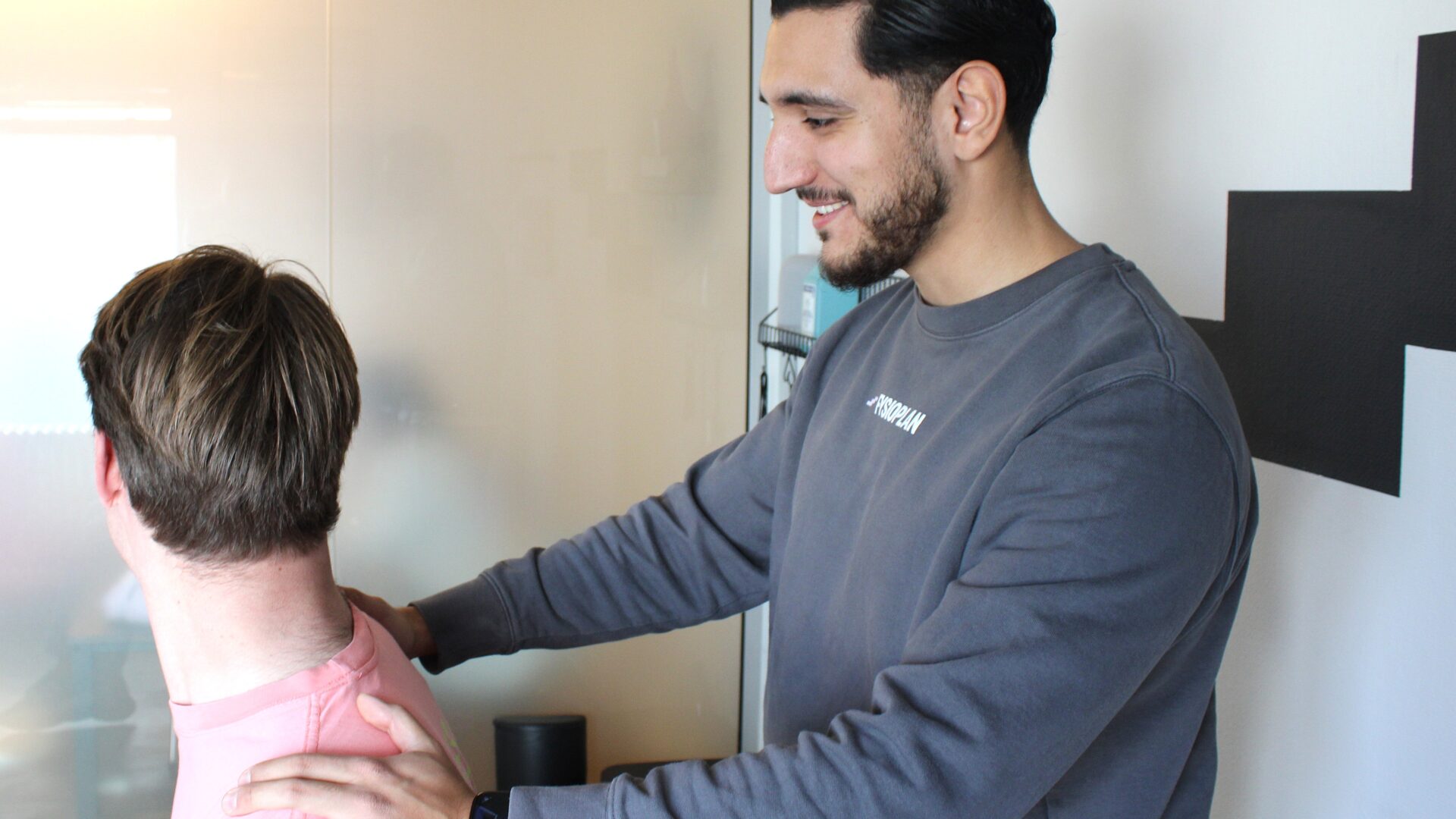
Bothered by a stiff neck that is suddenly there? Looking around, working or sleeping can then be quite difficult. Acute neck pain seems to come out of nowhere, but often has to do with muscle tension or a wrong posture.
The good news: with the right approach and guidance from a physiotherapist you usually recover quickly and feel free to move again.
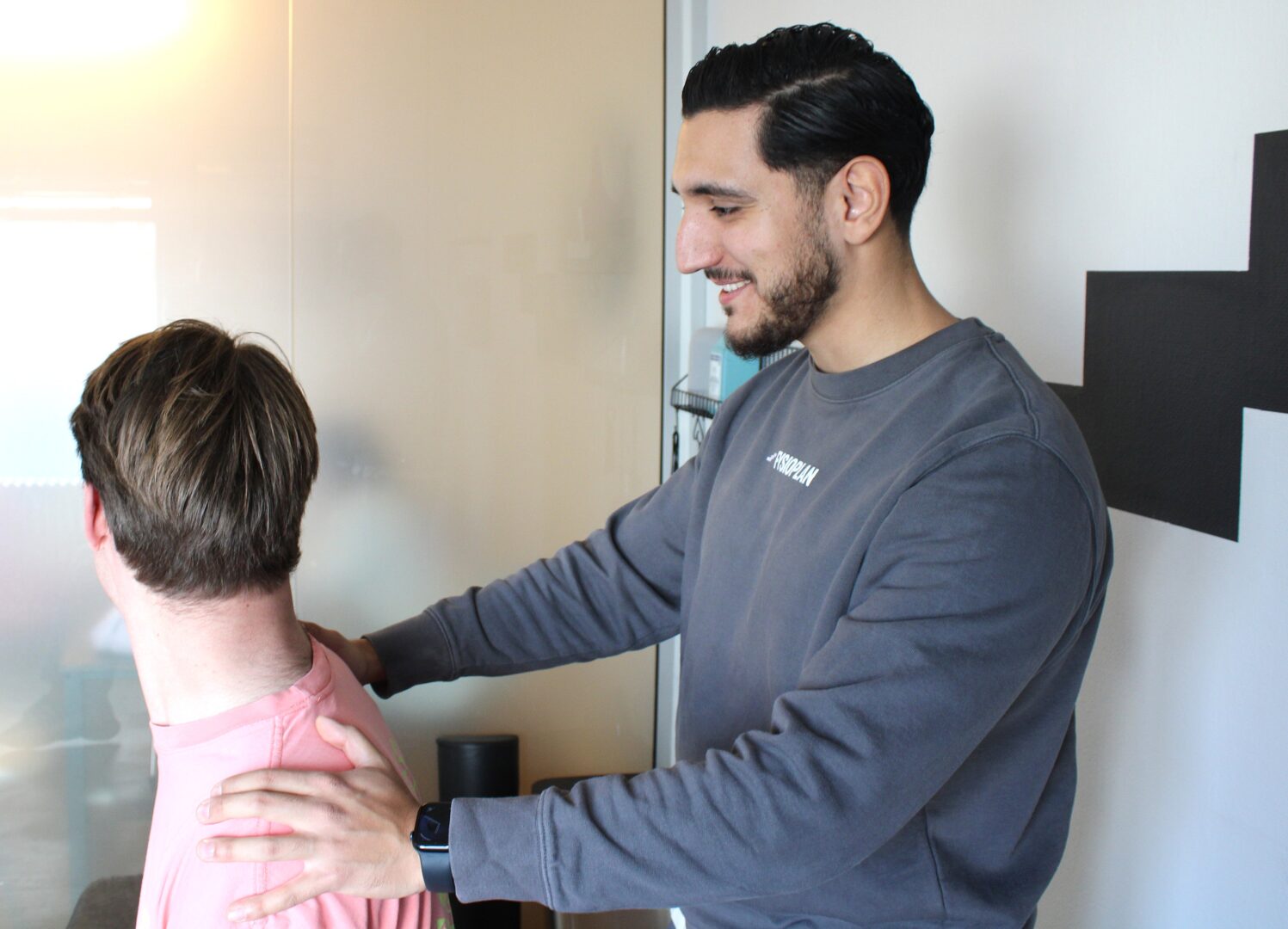
What is going on?
Acute neck pain often arises from a sudden movement, prolonged muscle tension or increased stress. Sometimes fatigue or a period of high load plays a part: think of sitting at the computer a lot, high work pressure and/or tension.
At FYSIOPLAN we see acute neck pain daily as one of the most common complaints.
Many people think their sleeping position is the culprit, but that is usually not true. How you lie says little about the development of neck problems. In one of our Instagram posts we explain why sleeping position is usually not the cause of neck problems.
The muscles and joints in your neck become stiff and painful through overload or irritation, which causes limited mobility.
In many people the neck muscles tighten reflexively to prevent further strain. This natural protective reaction feels painful and stiff, but is usually temporary. Still, it is important not to walk around with it for too long: the sooner you address the cause, the faster you recover.
💡 Did you know that about 70% of people experience neck pain at some point? It is one of the most common musculoskeletal complaints.
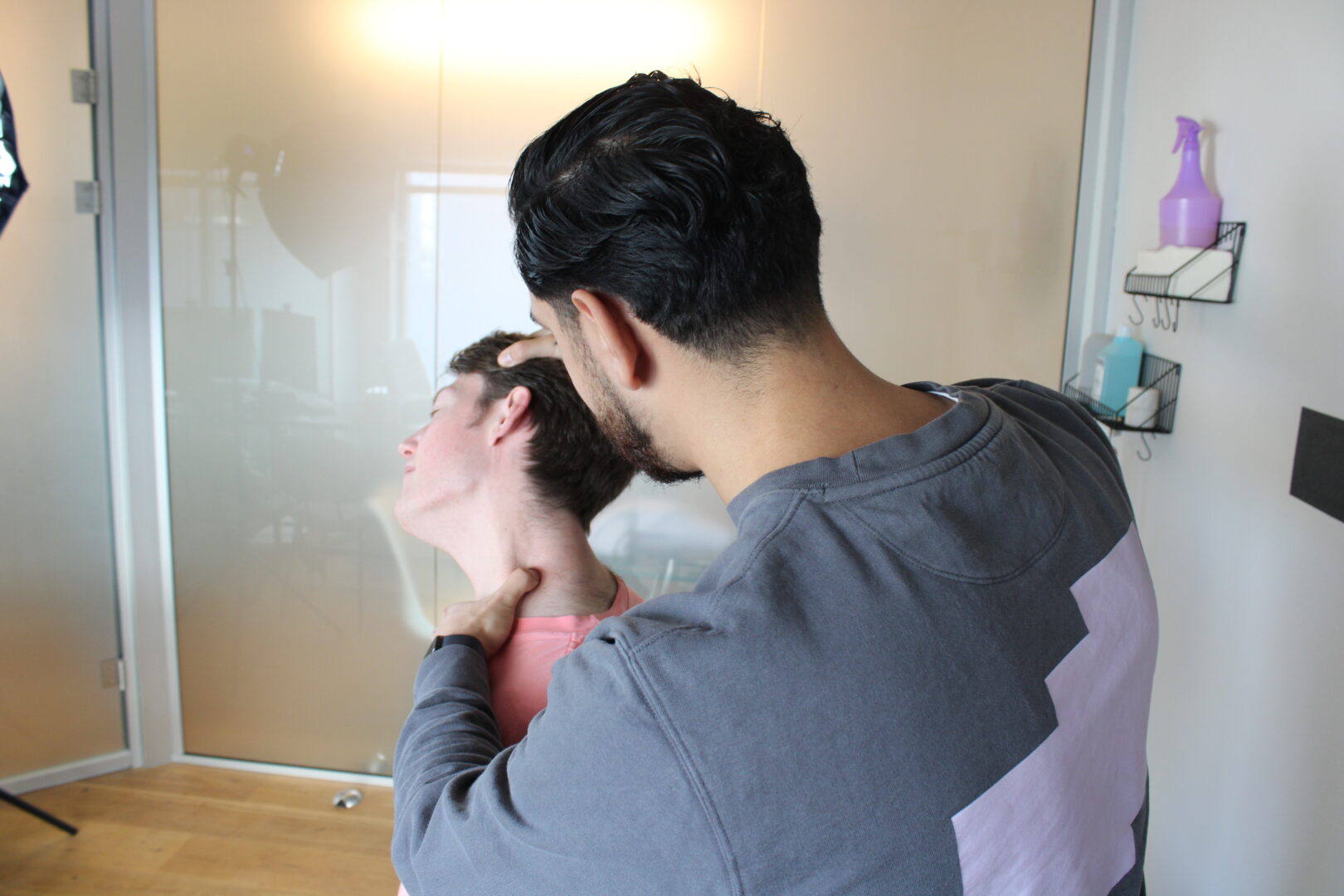
What can we do about it?
The first step is to keep moving within your pain limit. Complete rest slows recovery. Small, controlled movements actually stimulate blood flow and help the muscles relax faster.
At FYSIOPLAN we do not only look at where it hurts, but above all at why. During the first appointment we examine which factors may slow down your recovery: posture, muscle tension, stress or wrong loading.
Based on that we make a personal plan with:
-
Hands-on therapy such as mobilizations and myofascial techniques to reduce the tension in the neck muscles and improve mobility.
-
Targeted exercise therapy to reduce pain and improve movement.
-
Practical advice about load, work posture and daily activities, so that your recovery does not stall.
Recovery cannot be sped up, but it can be slowed down. That is why we make sure nothing stands in the way of your recovery.
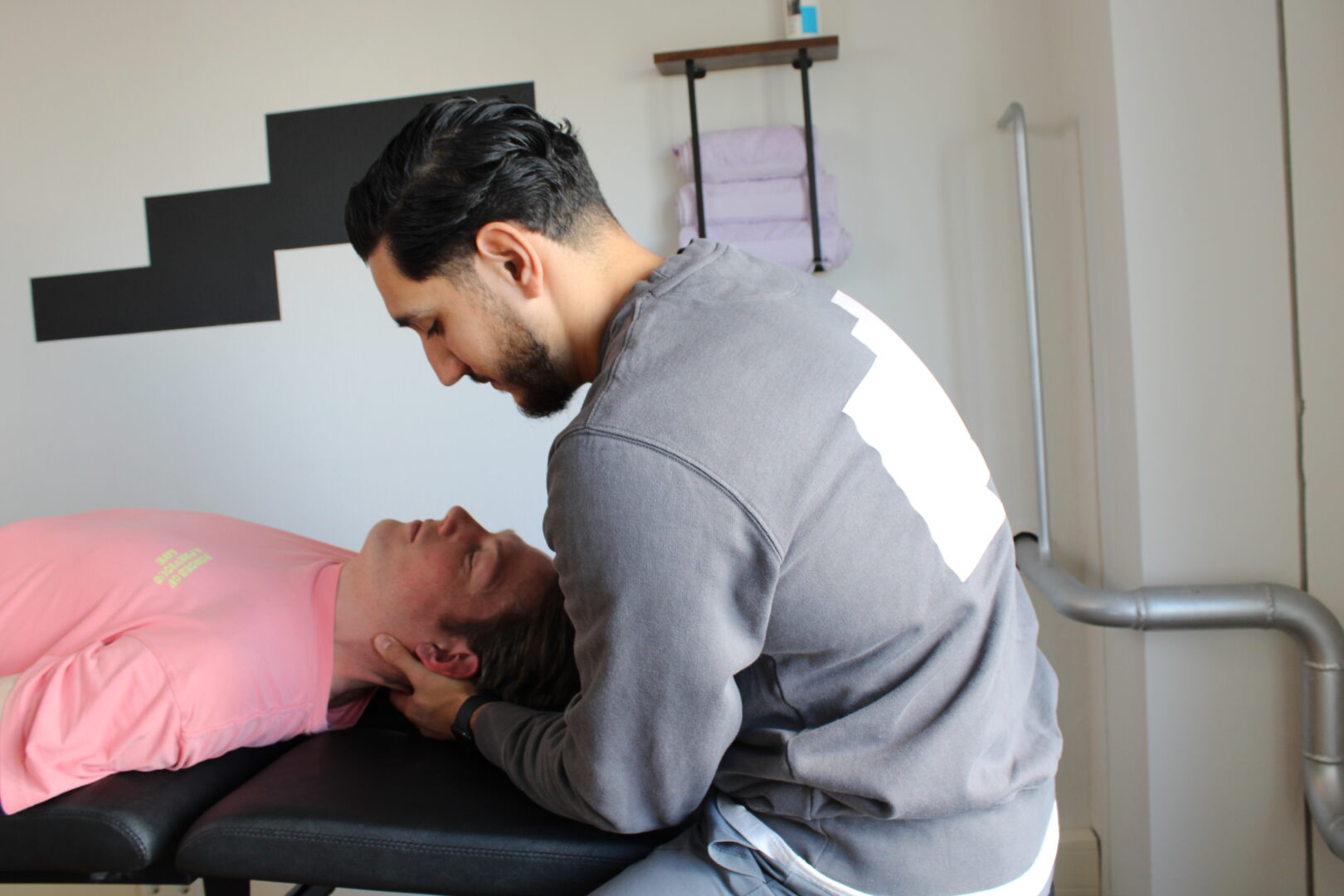
How long will it take?
In most cases acute neck pain recovers within two to six weeks, especially when you keep moving and match the load well to what your neck can handle at that moment. We call this the normal course. During this period the stiffness gradually decreases and you can usually resume your daily activities well.
Still, recovery does not go the same for everyone. Research shows that 50 to 85% of people experience neck problems again within five years or never completely get rid of the complaints. That means that some people deal with recurring or persistent pain, often because the load, stress or muscle tension continues.
If the pain does not noticeably decrease after two to three weeks, gets worse, or you doubt your recovery, it is wise to have this assessed in time. That helps to recognize delayed recovery early and to prevent the complaints from becoming chronic.
Also read: more about neck problems, whiplash and headache.
Our neck specialists






Want to make an appointment?
Schedule your appointment online yourself, whenever it suits you. Need to be seen today but nothing is available? Message us before 14:00 and we will make room for you!
Frequently asked
questions about
acute neck pain
-
Should I rest with acute neck pain?
Short rest can help, but prolonged bed rest is discouraged. Continuing to move within your pain limit promotes recovery and prevents stiffness. -
Can stress cause neck pain?
Yes, stress can cause tension in the neck and shoulder muscles, which can cause pain or make it worse. Want to know more about this? Schedule an appointment with us. -
Can I exercise with acute neck pain?
Light movement is actually good, but avoid heavy loading or exercises that cause pain. Swimming or walking can help keep the muscles loose. -
Can I get neck pain from my work?
Yes. Prolonged computer use, a lot of typing or lifting can overload neck and shoulder muscles. Ergonomic adjustments often help reduce complaints. -
Does physiotherapy help with acute neck pain?
Yes, physiotherapy can relieve pain and teach exercises to prevent recurrence.