Heel spur: how to make your first steps in the morning comfortable again
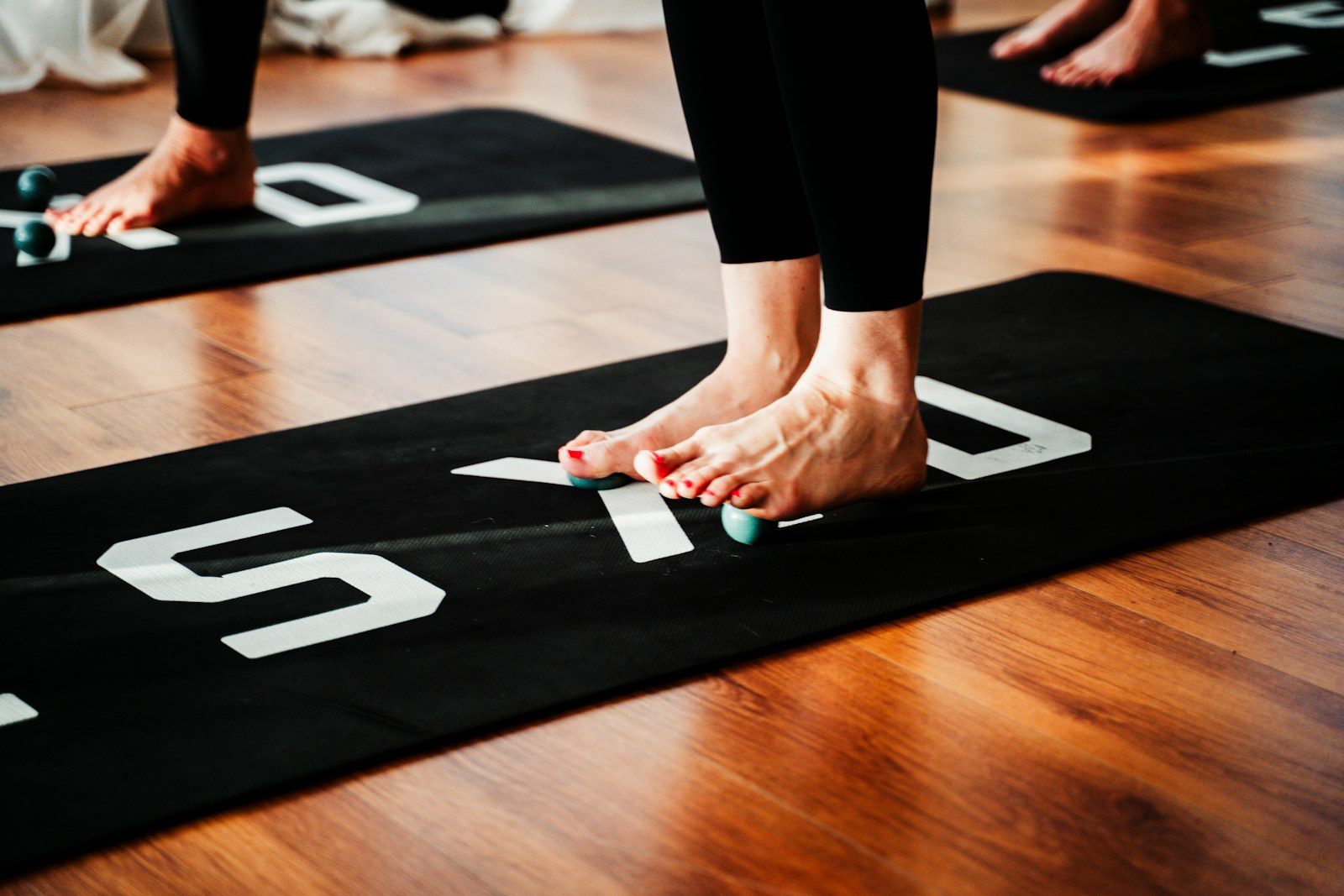
You step out of bed in the morning and with the first steps it feels like there is a pebble under your heel. After a few minutes of walking it eases off.
That is the typical picture of plantar fasciitis, commonly called heel spur. The band of tissue under your foot has become sensitive and gets stronger again with the right exercises and load. Our physiotherapists in Rotterdam have a lot of experience with heel spur and help you with a clear plan, so standing, walking, and sport feel comfortable again.
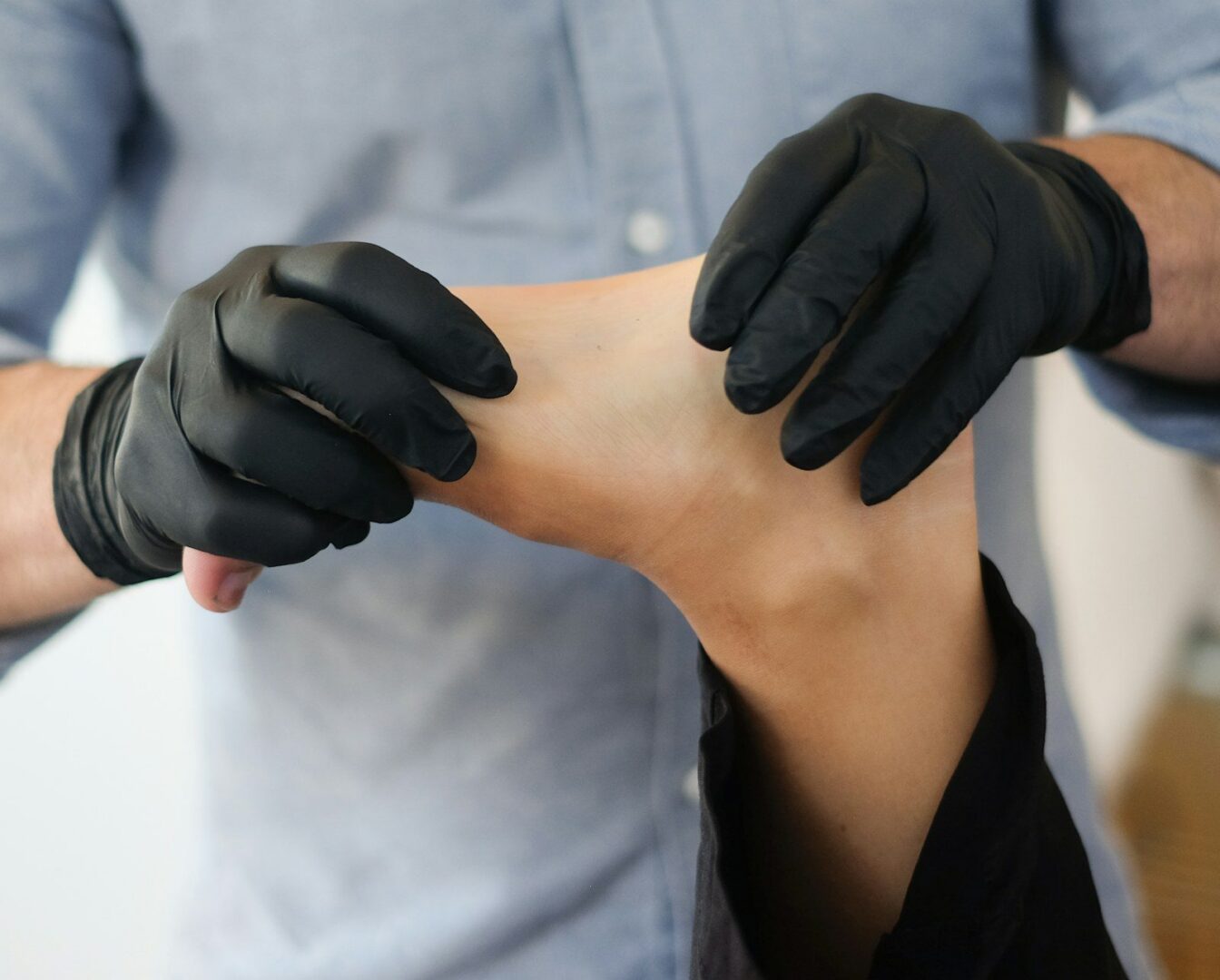
What is going on?
Under your foot runs a sturdy band of tissue, the plantar fascia, from your heel to your toes. With every step it works like a spring. If the plantar fascia has to handle more than it is used to for a while, for example through a lot of standing, more running, or some extra weight, the attachment point at your heel becomes sensitive. It is common: about 1 in 10 people deal with it, often between the ages of 40 and 60.
You may also hear it called plantar fascia inflammation or plantar fasciitis.
You come across several names. Plantar fasciitis is the best-known medical term. Because inflammation is usually not involved, sports doctors and physiotherapists increasingly speak of plantar fasciopathy. Heel spur is the popular name. It refers to a small bony ridge on the heel that is sometimes visible on an X-ray. That ridge is not the cause of your pain: many people without heel pain have it too.
Recognizable complaints:
- Pain under your heel, often on the inner side
- Mostly bothersome with the first steps after getting up or after sitting for a long time
- More pain after standing or walking for a long time
- A tender spot when you press on the underside of your heel
- More discomfort barefoot on a hard floor
What can we do about it?
You can already do a lot yourself:
- Stretch your calf and the sole of your foot every day
- Make your foot stronger with heel raises on a stair step, with a rolled-up towel under your toes. Do this every other day and build up gradually
- Stay active and dose by feel: pain up to about 3 on a scale of 10 during or after moving is fine
- Wear shoes with good support and a heel that is slightly higher than the forefoot, and preferably don't walk barefoot at home
- Alternate standing for a long time with sitting for a bit or walking a short distance
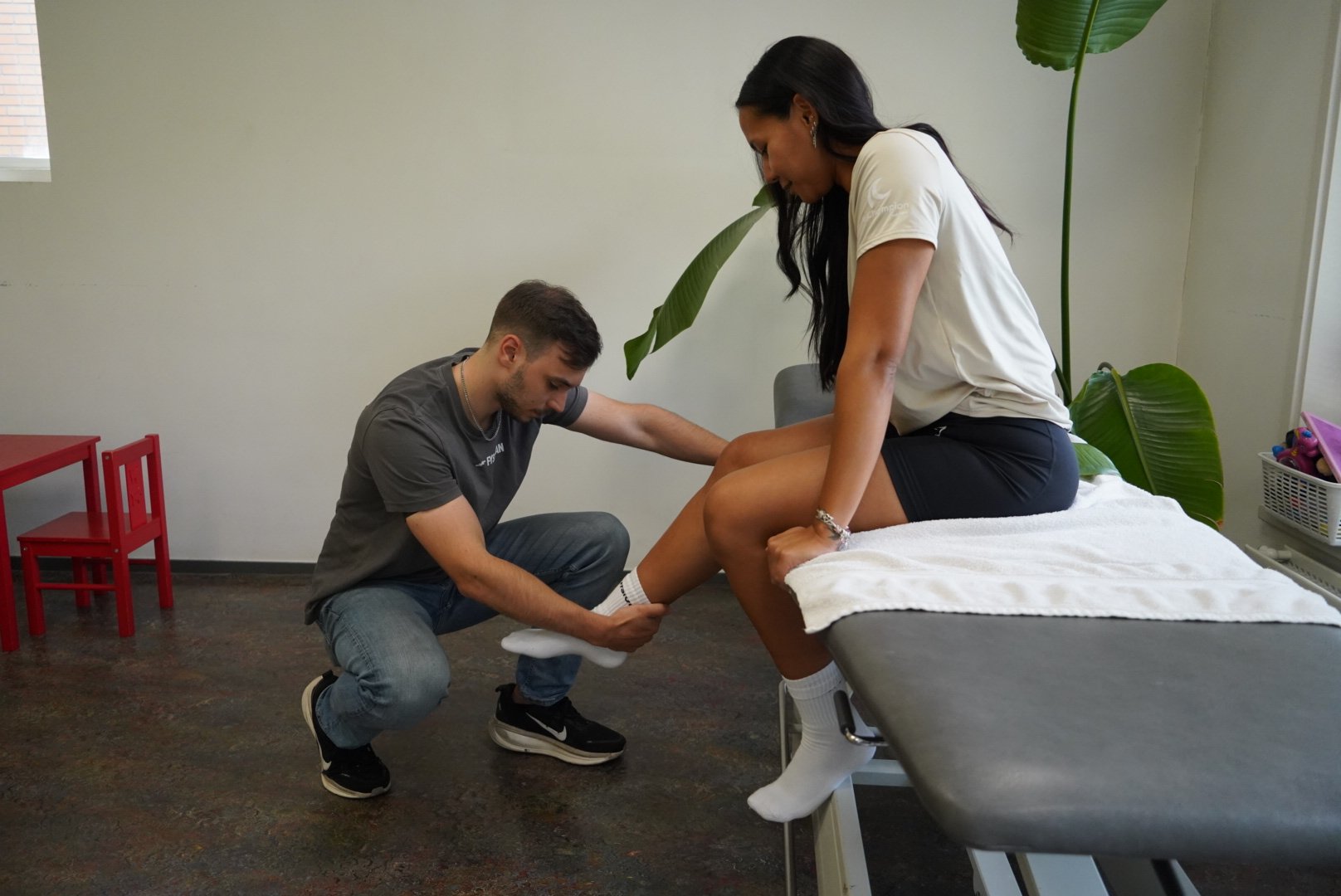
At FYSIOPLAN we tackle it together with you:
- We examine your foot and explain what is going on, so you know what your foot needs
- We put together an exercise program with stretching and strength exercises that we make harder step by step
- We use tape and hands-on treatment to relieve the pain in the short term
- We advise you on shoes and look together at whether insoles are a useful addition
- Do you run? Then we make a build-up plan so you can keep training

How long will it take?
With daily exercises, most people notice within about 12 weeks that the pain decreases and that they can do more again. Being completely symptom-free often takes longer, usually several months and, for some people, a year or more. How fast it goes differs considerably from person to person. So keep up your exercises even when it is already getting better: that way your foot builds the load capacity it needs.
Unsure whether you are doing the right thing, or is it going slower than you hoped? Feel free to contact contact us, and together we'll adjust your exercises and load.
Targeted exercise and smart load management make your foot stronger again. We make sure you do that at the right level, with a plan that fits your work and your sport. Our physiotherapists are ready for you.
Book an appointment right away and take the first step toward walking smoothly without heel pain.
Want to know more? Then also read our page about tendon problems and about ankle and foot problems.
Also read our article about a stiff big toe.
Our ankle specialists





Want to make an appointment?
Schedule your appointment online yourself, whenever it suits you. Need to be seen today but nothing is available? Message us before 14:00 and we will make room for you!
Frequently asked
questions about
heel spur
-
Is heel spur the same as plantar fasciitis?
Colloquially, yes. By heel spur most people mean pain in the band of tissue under the heel, and that is called plantar fasciitis or plantar fasciopathy. The bony ridge that is sometimes visible on an image is also common in people without symptoms.
-
Does an X-ray need to be taken?
Usually not. Your physiotherapist makes the diagnosis with a conversation and a physical examination. An X-ray or ultrasound adds little to that for most people.
-
Can I keep walking or playing sports with a heel spur?
Often yes, if you dose the load well. Pain up to about 3 on a scale of 10 during or after moving is fine. If it gets higher, we adjust your activities together.
-
Do insoles help with a heel spur?
Insoles can help as a supplement to exercises and good shoe advice. Ready-made insoles probably work just as well as custom-made ones. Your physiotherapist first looks at your foot and advises you on whether insoles make sense.
-
Do I need a referral?
No, you can come to us without a referral from your GP.