Shoulder osteoarthritis: less pain and more freedom of movement with targeted exercise

Putting on your jacket, reaching something from the top shelf, or doing your hair: your shoulder is stiffer than it used to be and feels tight. Sometimes you notice it at night too.
That can fit with osteoarthritis in the shoulder. Good news: with targeted exercise and staying active you have a lot of influence on how your shoulder feels and what you can do with it. Our physiotherapists in Rotterdam have a lot of experience with shoulder osteoarthritis and help you make your shoulder more supple and stronger again, so daily things get easier.
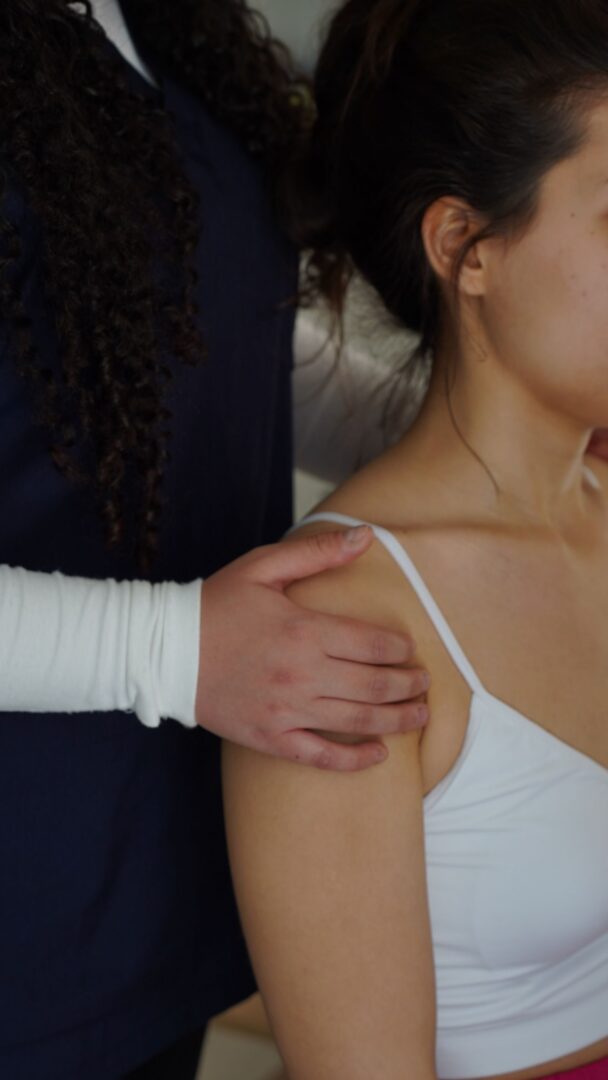
What is going on?
Shoulder osteoarthritis is also called osteoarthritis in the shoulder, omarthrosis, or glenohumeral osteoarthritis. It takes place in the joint between your upper arm and your shoulder blade. With osteoarthritis the joint changes: the cartilage, the bone underneath, and the capsule around it adapt. It mainly occurs from middle age, and slightly more often in women.
Maybe you have heard the words worn-out shoulder or wear and tear . That sounds like your shoulder is wearing out, but that is not how osteoarthritis works. Your joint keeps adapting to how you use it. That is why moving actually helps: the muscles and tissue around your shoulder get stronger, and your shoulder can handle more again.
Recognizable symptoms of shoulder osteoarthritis:
- A stiff feeling in your shoulder
- A deep, nagging pain in the shoulder that flares up when moving
- Pain at night
- Creaking or grinding when moving
- Difficulty getting dressed, reaching, or doing something above your head
- Less strength in your arm
Characteristic is that your symptoms fluctuate: periods with more discomfort alternate with periods with little discomfort.

What can we do about it?
You can already do a lot yourself:
- Keep using your shoulder and arm in daily life, even if it is a bit sensitive
- Move your shoulder gently a few times a day as far as it goes; regular movement keeps it supple
- Having a period with more discomfort? Then scale back for a while instead of stopping, and build up gradually again afterwards
At FYSIOPLAN we help your shoulder forward:
- We look at how your shoulder moves and what you want to be able to do again in daily life
- We put together an exercise program that builds your mobility and muscle strength step by step
- We combine training at the practice with exercises you do at home
- We explain what osteoarthritis is and how to distribute your load smartly
An exercise program under the guidance of a physiotherapist is at the top of the treatment options for shoulder osteoarthritis. Our physiotherapists make sure you exercise at a level that suits your shoulder.
How long will it take?
Expect an initial training period of about three months. In research on a twelve-week exercise program, with one supervised session per week and exercising at home twice, people with shoulder osteoarthritis clearly improved on average in pain, daily functioning, and mobility. That also applied to people who already qualified for an artificial shoulder.
After that you keep using and moving your shoulder, and you keep up your exercises. A week with more discomfort is part of the fluctuating course of osteoarthritis; together we then adjust your build-up.
If an artificial shoulder comes into view later after all, then a well-moving, strong shoulder is an excellent starting position: how your shoulder functions beforehand counts toward recovery afterwards.
Targeted exercise helps your shoulder become more supple and stronger. Our physiotherapists make a personal exercise plan with you and guide you step by step. You don't need a referral.
Want to know more? Then also read our page about osteoarthritis treatment, about shoulder problems and our article about osteoarthritis in the knee or hip.
Also read our article about recovery after shoulder surgery.
Our shoulder specialists






Want to make an appointment?
Schedule your appointment online yourself, whenever it suits you. Need to be seen today but nothing is available? Message us before 14:00 and we will make room for you!
Frequently asked
questions about
shoulder osteoarthritis
-
Can I just put load on my shoulder with osteoarthritis?
Yes. Keep using your shoulder, even if it is a bit sensitive. Regular movement keeps it supple, and with targeted exercises you build strength. A physiotherapist helps you find the right dosage.
-
Which exercises help with shoulder osteoarthritis?
Exercises for mobility and muscle strength, built up from light to heavier. A program of about twelve weeks, partly supervised and partly at home, shows clear progress in pain and function in research. Which exercises suit you, we determine together.
-
Does an injection help with shoulder osteoarthritis?
An injection in the shoulder can reduce the pain for a number of weeks. You can make good use of that period to build up your mobility and strength further with exercise.
-
Do I need an artificial shoulder?
Usually not as a first step. An artificial shoulder comes into view if exercise, pain relief, and possibly an injection help too little. You make that choice together with your doctor. The better your shoulder moves beforehand, the better that is for recovery afterwards.
-
Do I need a referral?
No, you can come to us without a referral.